East Coast vs. West Coast: When Music Became a Battlefield
In the mid-1990s, hip-hop was at its creative and commercial peak. But beneath the surface of this golden era, a bitter rivalry was brewing between two of the genre's most powerful record labels: Los Angeles-based Death Row Records and New York's Bad Boy Records. This wasn't just a competition; it became a full-blown cultural war that pitted the West Coast against the East Coast, ultimately ending in tragedy.


The Background: Setting the Stage for Conflict
For years, New York City was the undisputed center of the hip-hop world. But by the early '90s, the West Coast, led by artists from Compton and Long Beach, had developed its own unique sound and identity. The tension started as a friendly competition but soon grew more serious. The industry became divided into two camps, each with a powerful label at its core.
- Death Row Records: Founded in 1991 by Dr. Dre and the imposing Marion "Suge" Knight, Death Row represented the West Coast with a raw, gangster-infused, and commercially slick image.
- Bad Boy Records: Founded in 1993 by the ambitious producer and entrepreneur Sean "Puffy" Combs (now Diddy), Bad Boy represented the flashy, radio-friendly, and business-savvy side of New York hip-hop.
The Icons: Kings of Their Coasts
At the heart of the conflict were two of the most talented rappers to ever live, who went from being friends to bitter enemies.
West Coast: Tupac Shakur (2Pac)

Tupac was the fiery, charismatic heart of Death Row. He was a complex figure—part poet, part activist, and part gangster. His music was passionate, aggressive, and deeply personal. After Suge Knight helped bail him out of prison, Tupac signed with Death Row and became the label's biggest star and the face of the West Coast movement.
East Coast: The Notorious B.I.G. (Biggie Smalls)
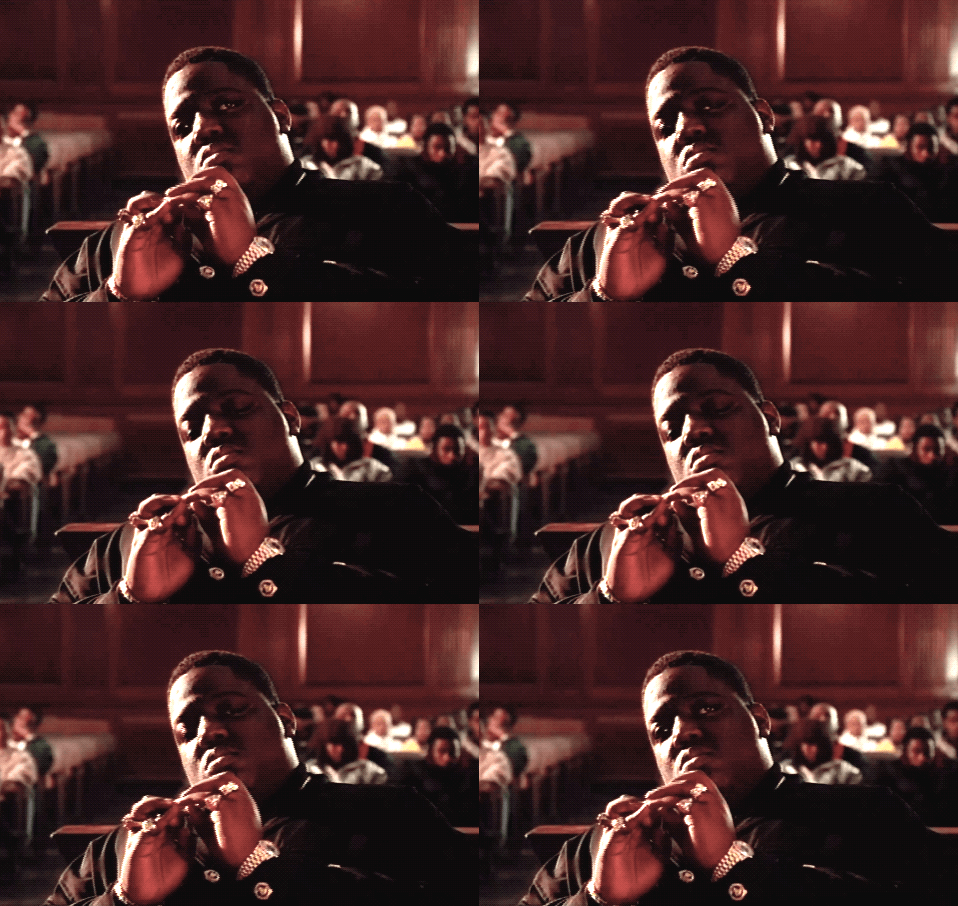
Biggie was the lyrical genius of Bad Boy Records. With an incredibly smooth flow and unmatched storytelling ability, he could paint vivid pictures of street life in Brooklyn. He was Puffy's best friend and the cornerstone of the Bad Boy empire, representing the gritty yet glamorous New York lifestyle.
The Sound: G-Funk vs. Boom-Bap
The two coasts also had distinct musical styles.
- West Coast G-Funk: Pioneered by **Dr. Dre**, G-Funk (Gangsta-Funk) was smooth and melodic. It featured deep, funky basslines, high-pitched synthesizers, and a laid-back, sun-drenched vibe perfect for cruising in a car.
- East Coast Boom-Bap: The New York sound was gritty and raw. It was built on hard-hitting drum loops (the "**boom-bap**"), often sampled from old jazz and soul records. The focus was less on melody and more on intricate lyrics and complex rhyme schemes.
The Conflict: How It All Exploded
A series of events turned the musical rivalry into a dangerous personal feud.
1. The 1994 Quad Studios Shooting
In November 1994, Tupac was shot five times and robbed in the lobby of Quad Recording Studios in New York. Puffy and Biggie were in the same building at the time. Tupac survived but became convinced that they had set him up. This incident planted the seeds of deep paranoia and betrayal in his mind.
2. The 1995 Source Awards
This was the night the beef went public. Suge Knight took the stage to accept an award and delivered a now-infamous speech, taking a direct shot at Puffy:
"Any artist out there that want to be an artist and want to stay a star, and don’t have to worry about the executive producer trying to be all in the videos, all on the record, dancing… come to Death Row!"
3. The War on Wax
The conflict moved to the recording booth. After Biggie released the song "Who Shot Ya?", Tupac believed it was a direct taunt about the Quad Studios shooting (Bad Boy denied this). In response, Tupac released "**Hit 'Em Up**," arguably the most brutal and direct diss track in hip-hop history. He personally attacked Biggie, Puffy, and their associates, making the feud dangerously personal.
The Anthems: Defining Tracks of the Era
Beyond the diss tracks, both labels released timeless classics that defined their sound.
Death Row Essentials:
- Dr. Dre ft. Snoop Dogg - "Nuthin' but a 'G' Thang"
- 2Pac ft. Dr. Dre - "California Love"
- Snoop Dogg - "Gin and Juice"
Bad Boy Essentials:
- The Notorious B.I.G. - "Juicy"
- The Notorious B.I.G. - "Hypnotize"
- Puff Daddy & The Family - "Mo Money Mo Problems"
More Than Music: The Culture and Style
The rivalry was also visible in the fashion. The West Coast was known for a more laid-back, street-oriented style with flannel shirts, Dickies, and bandanas. The East Coast, influenced by Puffy's vision, embraced a flashier look with designer clothes, shiny suits, and luxury brands.


A Tragic End and Lasting Legacy
The conflict reached a tragic and senseless end. In September 1996, Tupac Shakur was shot and killed in Las Vegas. Just six months later, in March 1997, The Notorious B.I.G. was also shot and killed in Los Angeles. Both murders remain officially unsolved to this day.
The deaths of these two young, brilliant artists shocked the world and served as a tragic wake-up call for the hip-hop community. The East Coast vs. West Coast war was a dark chapter fueled by ego, media hype, and real-world violence. While it produced some of the greatest music of all time, it also cost two of the genre's brightest stars their lives, leaving behind a legacy that is both iconic and cautionary.
West coast looks interesting...
ReplyDelete